Around the twentieth of June the sun gets as high as it is going to get over the bay, and then it turns around. That is the solstice, a word from Latin that means the sun stands still, and for a day or two it seems to. All spring the sunrise creeps north along the horizon each morning, a little farther every day, and then it stops creeping. It holds. Then it starts back south, so slowly that nobody notices until the football lights come on in August and it is dark before anyone is ready.
Go out to the pier at Bayland Park on that evening and you get the longest light of the year. Fourteen hours, near enough, of sun. The water goes from brown to pewter to something like copper. The mosquitoes arrive on schedule. Across the water the plants are lit for the night before the night has come, which looks like waste and is only habit. Kids fish off the rail. Somebody has a speaker going. The heat hangs on after the sun is down, because the ground and the water have been drinking light all day and now they are giving it back.
Start with the tilt, because it explains the day. The Earth leans. Its axis is set about twenty-three and a half degrees off from straight up, relative to the plane it travels around the sun, and the lean does not change as we go around. So for half the year the northern half of the planet is tipped toward the sun and for half the year it is tipped away. In June it is tipped toward. The sun climbs higher, its light comes down steeper, the days stretch. In December it is the opposite. The seasons have nothing to do with distance from the sun; we are in fact a little farther from it in July than in January. They are about angle. Hold a flashlight straight down on a table and the circle of light is small and bright. Tip the flashlight and the same light spreads into a long dim oval. Steep light is strong light because it is not spread thin. That is why noon burns and evening does not, and why June burns and December does not.
So on the longest day, more sunlight lands on this stretch of Texas than on any other day of the year. It lands on the bay and heats it. It lands on the marsh grass out at the Nature Center, and the grass does the thing that only living things do with light, which is to keep some of it.
Photosynthesis is a plain enough idea if you say it plainly. A leaf takes carbon dioxide out of the air and water out of the ground and uses the energy of sunlight to bolt them together into sugar. The sugar holds the energy. The leaf holds the sugar. Then something eats the leaf, or the leaf falls and rots, and the energy moves on. But the essential trick is that light, which is fleeting, has been turned into something with mass that can be stored, moved, and burned later. A stick in a campfire is old sunlight. So is a bowl of rice. So are you.
Now go back. Not to last summer. Go back hundreds of millions of years, to when the land that became Texas was under a warm shallow sea, and the sea was full of very small living things. Plankton, algae, tiny drifting cells that did nothing all day but float near the surface and take in sunlight and turn it into themselves. Trillions of them. They lived a few days and died and sank. On the bottom they piled up, in a mud so thick and so poor in oxygen that they did not rot the way things rot in air; the creatures that would have eaten them could not breathe there. They were buried. More mud came. More sea. The layers pressed down. Over spans of time that no one can really feel, the pressure and the heat of the deep rock cooked the dead cells slowly, drove off the water, broke the fats and proteins down, and rearranged what was left into chains of carbon and hydrogen. Geologists call the depth where this happens the oil window: a couple of miles down, give or take, where the rock runs somewhere between the temperature of a hot cup of coffee and the temperature of boiling water, warm enough to cook the organic matter into oil and not so hot that it breaks all the way down to gas. Oil. Gas. The sunlight that fell on that sea was still in there, locked in the bonds between the atoms, waiting.
That is what is in the ground under this town. That is what came up out of the Goose Creek field early last century, when derricks stood in the water off Tabbs Bay and the ground sank as they pumped. That is what the ships bring up the channel from everywhere else. Every barrel is a barrel of concentrated summer, from a season before there were seasons anybody could name.
Hold that thought while the sun goes down.
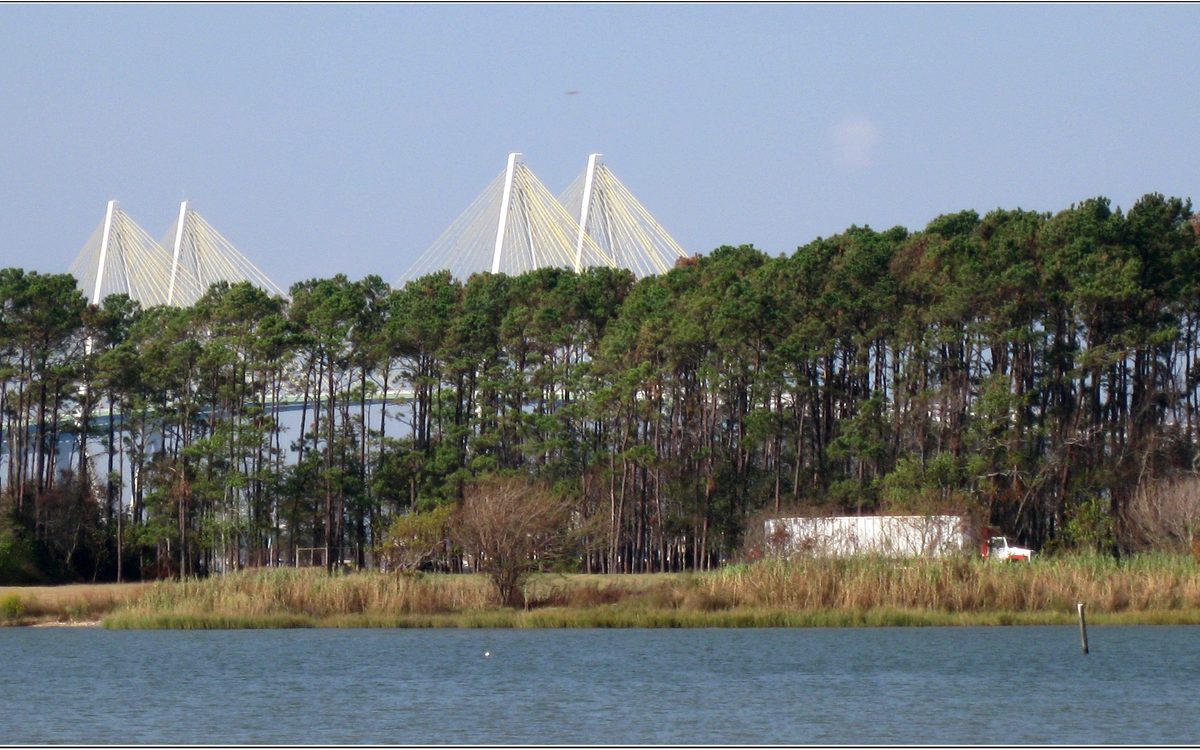
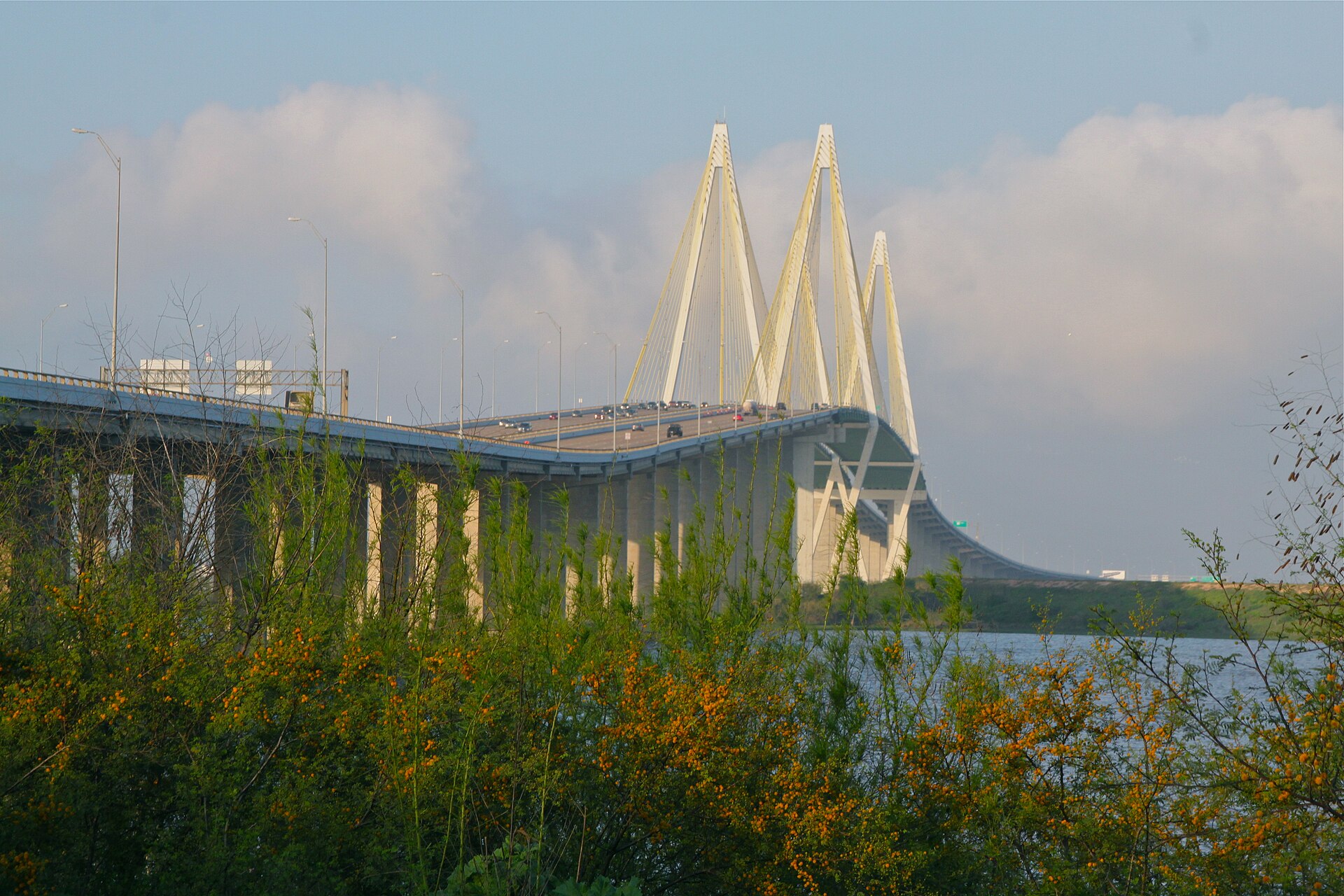
The plant across the water is usually described as a place that makes energy. Nobody makes energy. The first law of thermodynamics says as much: energy is not created, only moved from one form to another. What the refinery and the cracker do is take the stored sunlight of an ancient sea and unlock it, carefully, in stages, into forms that are useful right now. Heat the crude and it sorts itself by boiling point up a tall column, the smallest molecules climbing highest: gases at the top, then gasoline, kerosene, diesel, the heavy stuff at the bottom. Crack the lighter gases at eight or nine hundred degrees Celsius and the molecules snap into ethylene, which is the beginning of more of the world's plastic than any other single molecule. Burn the fuel in an engine and the sunlight comes out again as motion, as a truck climbing the Fred Hartman Bridge, as a plane lifting off. The plant is not a source. It is a valve. The source is ninety-three million miles away and has been the source the whole time.
Which means the real feedstock of the channel is the sun, and not as a figure of speech. The crude in the tank farm is sunlight that took the long way. When the operator on the night shift looks at a furnace running at eight hundred and fifty degrees, she is looking at daylight from a sea that dried up before anyone was here to name it, being let out slowly through a controlled fire so that somebody in a hospital in Houston can have a plastic IV line. The chain is unbroken. Star, sea, mud, rock, well, ship, tower, pipe, product, you.
It is a strange thing to stand on the pier and feel the sun on your neck and know that the same light, in its older form, is running the town. The heat on your skin and the heat in the furnace are the same heat, from the same star, separated by a few hundred million years of waiting. The sun is patient. It has been putting energy into this planet for four and a half billion years and the planet has been saving some of it, in leaves and bones and peat and oil, the way a kitchen saves bacon grease in a can. We are the ones who found the can.
There is a humility in that, if you let there be. It is easy to talk about energy as something we own: our production, our reserves, our industry. But the honest accounting says we do not make any of it. We inherit it. The sea did the work of gathering. The rock did the work of keeping. What we do, on the channel, is the work of opening it up and sending it along, and the only part that is really ours is the care with which we do that. A valve is not nothing. A valve run badly is a fire. A valve run well is a city.
The sun itself stores nothing. It has no tank. Every second it turns about four million tons of its own mass into light and lets the light go, and it has done that without a pause for four and a half billion years and will for about as long again. It is the one thing in this story that only spends. Everything down here, the plankton, the mud, the oil, the tank farm, the man in the truck with the thermos, is a way of holding a little of that spending back for later. The solstice is the day the holding-back comes closest to keeping up.
There is a thing people say about this coast, that it is hot, as though that were a complaint about the place rather than a description of its wealth. The heat is the point. The heat is why the sea was here and why the plankton bloomed in it, thick enough to matter when they sank. The heat is the sea breeze that comes in off the Gulf every afternoon, which is nothing but the land warming faster than the water and the air moving to even it out, a small engine that runs on the same sun. A town that complains about the sun in June is a town complaining about its own bank.
And then the sun goes down, as far north along the far shore as it will go all year, and seems to stand a moment on the line of the trees before it drops. Tomorrow it will set a hair to the south of that, and the day after a hair more, and nobody will notice until August. The planks of the pier are still warm through your shoes. The rail is warm. The water at the pilings is warm to the wrist. The light has gone off the bay but the heat has not, and will not for hours, because the water has been drinking sun since five in the morning and is only now, slowly, in the dark, beginning to give it back.