The lunchbox is on the counter by the coffee maker, where it always is, and it is the third Sunday in June, so this morning nobody is going to fill it. If you grew up in a house like this one, that is the holiday, all of it. The box stays shut. The truck stays in the driveway past five. The man who is usually gone before the light is at the table in his socks, looking slightly lost, because a day off that lands on a day he would have worked is not quite rest. It is more like a pause in a process.
I should say plainly what this father is. He is put together from a few dozen men, the ones I knew growing up and the ones I have watched since at the gas stations along the road before dawn, and he does not have a name because he does not need one. If you are from here you already know him. If you are not, you have met his work without knowing it, which is the point of this essay, and I will get to it.
Start with the box. Hard-sided, black or gray, the kind with a latch that snaps. Inside: two sandwiches, because one is not enough for twelve hours and there is no running to the store from inside a fence. A thermos of coffee that will be lukewarm by nine and finished anyway. Something sweet at the bottom that he pretends not to want. On the lid, a strip of tape with his last name in marker, because there are other boxes like it in the break room and a man who has lost a lunch once does not lose one twice.
Then the boots. They live by the back door and they are never clean, and there is no use trying. Steel toe, laces double-knotted, a gray line at the ankle where the pant leg rests. The boots go on last and come off first. Everybody in the house knows the sound of them on the porch at the end of a shift, the two thumps, and everybody knows the sound of them at the start, which is quieter, because he is trying not to wake anyone and never manages it.
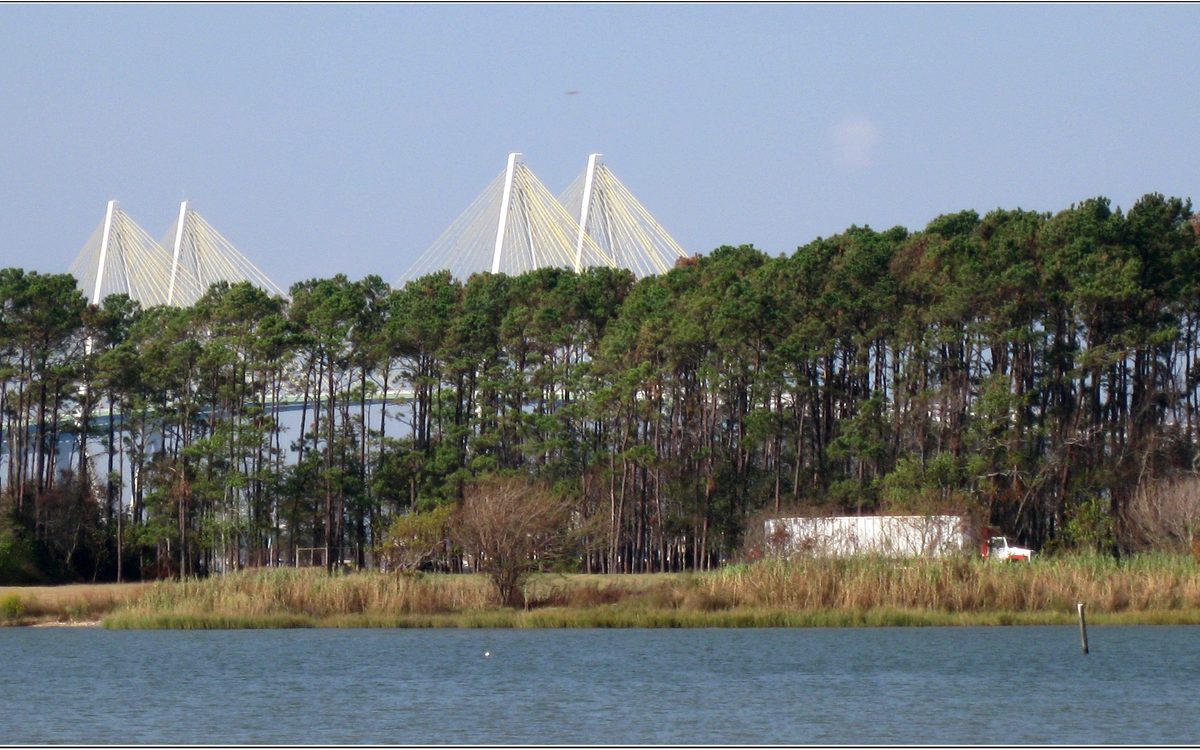
And the badge. It hangs on the hook with the keys. A plastic card with his face on it, a face from years ago, younger and thinner and a little surprised. The badge opens a gate that the rest of us have never been through. That is a strange thing to understand as a child: that the most important place in your father's life is a place you are not allowed to see. You see the top of it. From the road, from the bridge, from the pier at Bayland Park at night, you see the towers and the lights and the flare. But the inside of the fence is his, and he does not talk about it much, and when he does it is in a language of units and lines and numbers that means nothing at the table.
When he says anything about it, it is one of three things. "It was a good night." Or, "We had a little trouble on the unit." Or, "Turnaround starts Monday, don't expect me." That last one means the plant is shutting a section down for weeks of maintenance, and the contract crews are coming from all over the country to fill the hotels and the RV parks, and he will be working days that bleed into each other and will come home gray. The town knows a turnaround the way a farm town knows harvest. The restaurants get busy. The parking lots fill with trucks with other states' plates. And then it ends and the trucks go and the hotels empty and it is quiet again, until the next one.
Five in the morning. That is the hour I think of him at. The kitchen light on and every other window on the street dark. The coffee maker breathing. Him standing at the counter eating something over the sink so there is no dish. Then the box, the boots, the badge, the door, and the truck backing out with its lights off until it clears the driveway. He does that so the headlights don't sweep the bedroom windows. It is one of the small kindnesses that make up a life and that nobody counts.
Ask what he actually does, and you have to leave the kitchen. Behind that fence, on the channel, the plants take crude oil and natural gas, the pressed-down remains of a sea that was alive long before there were people to see it, and they take them apart. First by heat alone: crude is warmed until it climbs a tall column and sorts itself by how easily each part boils, the light gases off the top, gasoline and kerosene and diesel down the trays, the heavy tar at the bottom. Then by heat with intent. In a cracker, hydrocarbons are run through furnace tubes at eight or nine hundred degrees Celsius for less than a second, and at that temperature the long chains cannot hold together. They snap. Out of the snapping comes ethylene, two carbons and four hydrogens, small and eager to join, and ethylene is where most of the plastic in the world begins. Long molecules cracked into short ones, short ones joined into new long ones. Out the other side, through pipes and rail cars and ships, come the things the rest of the world builds with. Fuel, obviously. But also the plastic in the phone you are reading this on. The tubing in a hospital, the insulation in a wire, the foam in a car seat, the film that keeps food from spoiling on its way across an ocean. The complex at the edge of town on the channel is one of the largest of its kind in the country. The world runs, in some measurable part, on what comes out of that gate.
Think about the man at the table in his socks that way. Every shift he stands in a control room or walks a unit and keeps a process going that never stops. The plant has no weekends. It does not close for Christmas or for this Sunday in June. The thermos is as good a picture of what he does as any. Coffee sitting in a thermos is only a possibility; it becomes a shift when somebody unscrews the lid at two in the morning, standing up, and drinks it because there are ten hours to go. A tank of crude is the same. Energy sitting still is nothing yet. Only the drawing-down, on purpose, by somebody paying attention, turns it into fuel and plastic and light.
The father in this essay is that attention. He is the person who notices a reading drifting before it becomes a problem. A drifting reading is undramatic: a temperature a few degrees off where it was an hour ago, a pressure climbing when nothing has changed to make it climb, a level in a drum that should be steady and is not. Anyone can read a number. The job is to know what the number was supposed to be, and to feel the difference in the stomach before the alarm feels it in the wiring. He is the reason the process is a process and not an accident. Multiply him by a few thousand, the operators, the mechanics, the instrument techs, the lab, the crews who climb the towers in July, and you have the town, not its economy but the town itself, which is what a few thousand lunchboxes look like when you stand far enough back.
There is a thing he does not say, because men like him do not say it, so I will say it for him. The work is dangerous. Not every day, and not in the way the movies show, but in the way that a place full of heat and pressure and hydrocarbons is dangerous, which is to say it demands respect all the time and forgives nothing when it doesn't get it. He has been to funerals. He has been on the unit when something went wrong and come home and not talked about it. The sign at the gate counts days since the last incident, and the number is a kind of prayer. When he grumbles about a training class or a new procedure he is grumbling about something that exists to bring him home to that back door. He knows that. He grumbles anyway. That is also a kind of love.
My mother knew all this without being told, which is why the lunchbox was never empty. She was the other half of the process. Somebody has to be awake at four-thirty. Somebody has to keep the house running on rotating nights, when a man sleeps through the daylight and eats dinner at breakfast, when the phone has to be answered on the first ring and the kids learn to play in the yard instead of the hall. The plant's continuous process has a domestic twin, and that one doesn't get a badge.
What does the world owe him? Nothing personal. The world does not know his name and never will. That is fine with him. But the world should at least know that its hospitals and rockets and phones and roads have a starting point, and that the starting point, before it is a corporation or a market, is a man who put on boots in the dark. When the news talks about energy as a policy or a market or a problem, it is talking about him without noticing. He has not been asked his opinion. He has been asked to show up, and he has.
There is an old idea that the universe, having produced creatures that can think, is looking at itself through their eyes. If that is true, then it is also looking at itself through the eyes of a man checking a gauge at three in the morning, finding the number where it should be, and going to get another cup of coffee.
Later today there will be a grill, probably. The kids will give him something he does not need and he will act pleased, and he will be pleased, in his way. The box on the counter will stay closed. Tonight, before bed, somebody will open it and pack it anyway, two sandwiches and the thermos and the sweet thing at the bottom, and set it back by the coffee maker for the morning, with the tape on the lid facing out so he can find it in the dark.