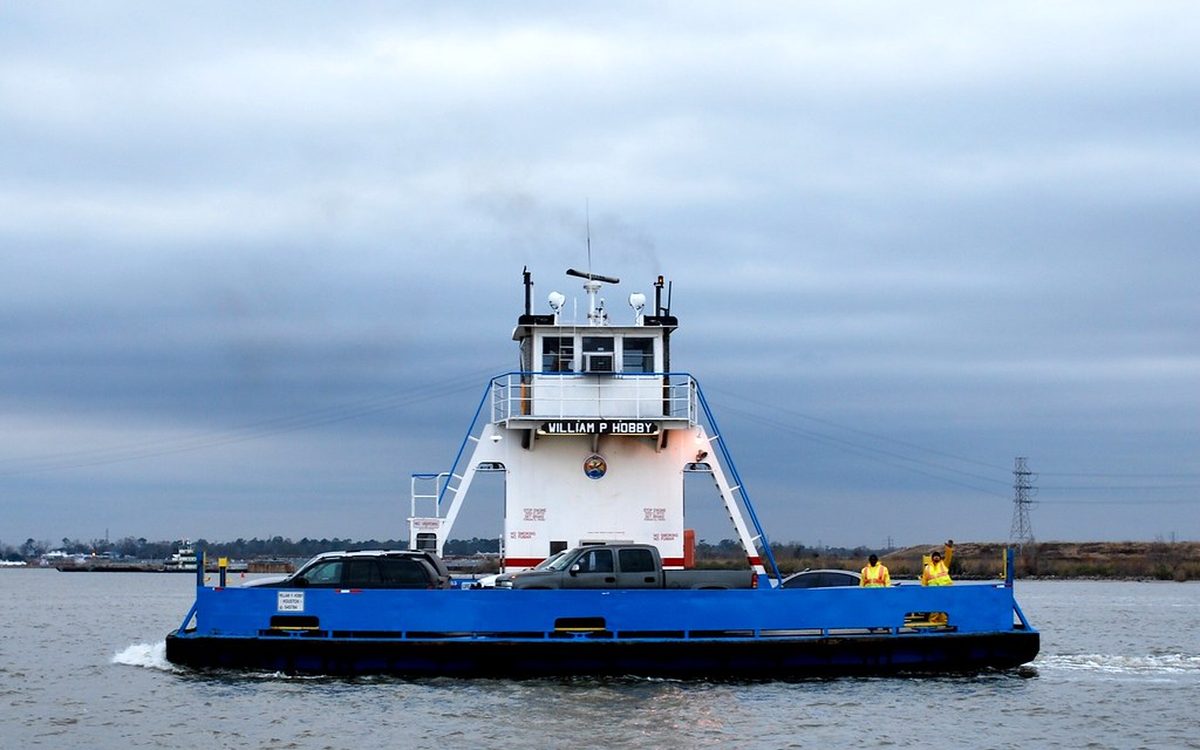
The third Monday in January is a day off for the schools and the banks and the post office, and a day on for nearly everyone else. That is the first thing to say about it here. The plants run. The hospital runs. The grocery stores and the gas stations and the drive-throughs on Garth run. The Lynchburg Ferry runs. In Baytown, a federal holiday is a Monday on which the school buses do not come but the shifts still change at the gate, and the people who honor Dr. King most literally are, more often than not, at work while they do it.
I do not think he would have minded. The last place he went was a labor strike. He went to Memphis for the sanitation workers, men who hauled the city's garbage for wages so low that some of them qualified for public assistance while working full time, who marched with signs that said, in four words, that they were men. He told them that all labor has dignity. He said, more than once and in more than one place, that a person who sweeps streets should sweep them the way a painter paints or a composer composes, so well that the world would have to stop and notice. He was killed in that city, on that errand. It is easy to remember the speeches and forget the errand. The errand was work. The errand was who does it and what it is worth.
So on a Monday in January, look at the water, because the water is the town's oldest piece of work, and nobody's name is on it.
The Houston Ship Channel opened in 1914. Before that, Buffalo Bayou was a muddy, twisting stream that a shallow boat could get up on a good day and a deep one could not get up at all. The merchants in Houston wanted a port. Galveston had one, and Galveston had been all but wiped off the map by the storm of 1900, and the men with money and ambition fifty miles inland saw their chance. They went to Washington and made a deal that was, for its time, unusual: the county would pay half the cost of the dredging and the federal government would pay the other half. Bonds were sold. A depth was agreed on, twenty-five feet. The dredges came.
If you go looking for the history of the channel, you will find the names of the men who made the deal and the names of the men who signed the bonds and the name of the president who, from a desk in Washington, pressed a button that fired a cannon at the Turning Basin on the day it opened. You will find the engineers. You will find the dredging company. What you will not find, or will find only in fragments, are the names of the people who were on the dredges. The crews who lived on the boats for months. The men who ran the pumps and cleared the pipes and shoveled the spoil and worked the cutter heads in the heat and the mosquitoes and the water moccasins, in a bayou that was being turned into something the world had not yet seen. They were working men. The records that survive are thin, but the hard labor of this coast in those years was done in large part by Black men and by immigrants, and by the kind of men whose names appear on a payroll and nowhere else. Their names are not on the channel. Their work is the channel. It is fifty-two miles of it, from the Turning Basin down past the refinery and under the bridge and out into the bay, and every ship that has come up it in more than a hundred years has come up it on their labor.
It helps to know what the work was. A cutter-suction dredge is a barge with a great rotating steel basket on the end of a ladder, and the basket is lowered to the bottom and spun, and it chews the mud loose, and a pump the size of a room sucks the loosened mud up the ladder as a slurry and pushes it out through a floating pipeline to wherever the spoil is to go. The dredge does not sail. It walks, swinging on anchors, a few feet at a time, cutting a swath and then stepping forward to cut the next one. Somebody has to tend the pump and the boiler that drove it, and somebody has to move the anchors, and somebody has to walk the pipeline and clear it when a stump or a chunk of clay stops it up, and somebody has to cook, because the crew slept aboard. It was slow, loud, hot, and wet, and it went on for years, and the mud it pulled up was piled along the banks in long low ridges that are still there if you know what you are looking at. Some of the islands in the bay are spoil. The land was made by the same hands that made the channel, and it has the same signature on it, which is none.
A century on, the town still works that way.
Look at how Baytown actually works, on any day, holiday or not. The plants are the biggest employers, and a plant, whatever it looks like from the highway, is a number of shifts. Somebody is on the board in the control room for twelve hours, and then somebody else is. Somebody is on the tower, somebody in the lab pulling samples, somebody on the docks tying up a barge at three in the morning, somebody driving the truck. When a unit comes down for a turnaround, a few thousand more people arrive from all over the country and fill the hotels and the RV parks and the taquerias, and for weeks they take the thing apart and put it back together, and then they leave, and their names are not on it either. The town has a population, and then it has a working population that swells and shrinks with the maintenance schedules like a tide, and if you took away every person whose name will never be on a plaque, there would be nothing left of it at all.
The same is true across Garth Road at the hospital, where the only labor-and-delivery unit in town is staffed around the clock by people who will not be remembered by the children they deliver. It is true in the schools, three high schools and all the campuses underneath them, where a teacher's name is known to a few hundred kids for a year and then fades. It is true of the crews that keep the water pressure up and the wastewater moving and the traffic lights on Garth timed, and of whoever it is that mows the medians on Bayway Drive, and of the county employees on the ferry who take you across the channel for free, in a few minutes, under three by the county historical commission's count and seven to ten in wind and traffic, and never learn your name and do not expect you to learn theirs.
Dr. King's argument, the one he was making in Memphis, was that this is not a reason to think less of the work. It is a reason to think more of it. A job does not get its dignity from being remembered. It gets its dignity from being needed and from being done well. The sanitation worker who does his route right is holding up a city. The dredge hand who keeps the pump running is opening a continent to the ocean. The operator on the night shift who catches a pressure reading drifting the wrong way and brings it back is standing between a town and a bad night, and nobody will ever know, because the bad night did not happen. That is what dignity in labor looks like from the inside. It looks like nothing happening. It looks like a town that woke up on a Tuesday and had water and lights and a road to drive on and never gave it a thought.
And the channel is still being dug. A channel is never finished. The bay fills it back in a little every year, silt off the rivers and mud off the bottom, and the ships have gotten bigger, and the twenty-five feet that was enough in 1914 would strand a modern tanker before it got to the bridge. The channel has been deepened again and again since, to more than forty feet, and the Corps of Engineers is never done with it. So the dredges are still out there. You can see them from the shore sometimes, low and ugly and lit up at night, doing the same job that was done a century ago with better pumps and a diesel instead of a boiler. Somebody is on them right now. The work that opened the channel is the same work that keeps it open, and it has never stopped, not for a day, and it has never had a name.
I want to be careful here, because there is a way of talking about the dignity of labor that is really a way of telling people to be quiet and grateful. That is not what King meant and it is not what I mean. He went to Memphis because the men were not being paid, and because the city would not recognize their union, and because two of them had been crushed to death in the back of a truck and the city had shrugged. The dignity of work is not a substitute for the wage. It is the reason for it. If a job holds up a city, the person doing it should be able to live in that city. That was the whole argument. The signs the men carried did not say they were grateful. They said they were men.
Baytown understands this, whether or not it says so. It is a union town in places and a contractor town in others and a town where half the households speak Spanish at home, and it has had every argument there is to have about who does the work and what it is worth, at the gate and at the hall and at the kitchen table. Those arguments are not over. They are not supposed to be. A town that makes what this town makes, for the whole country, is entitled to keep asking what the people who make it are owed, and that asking is the work's other half.
When the holiday ends, which for most of the town it never began, the shift changes. A few thousand cars go one way through the gates and a few thousand come the other way. The ones going in will be on the board and on the tower and on the docks until morning. The ones coming out will stop for gas and something to eat and will be asleep before the news. Out past the fence, on the far side of the water, a dredge is lit up like a small city that has forgotten to go to bed, and it is doing what the men on the dredges did in 1914, and if you asked it who dug the channel it would say, without stopping, that the channel is being dug.