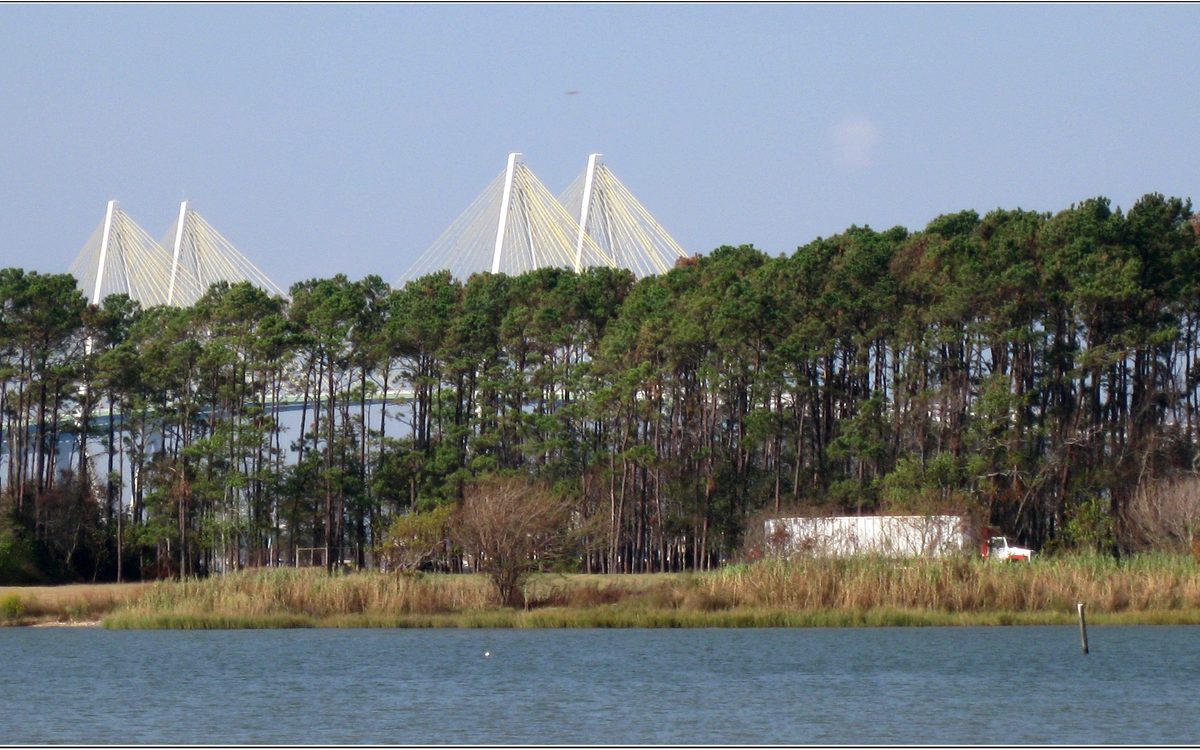
On the Saturday nearest the twenty-first of April, people from Baytown drive over the bridge or take the ferry and stand in a field across the channel where, on one afternoon in 1836, the whole shape of this part of the world was decided in about the time it takes to cook rice. There are reenactors in wool coats sweating in the sun. There are cannon, which the children love and the dogs do not. There is the monument, which you can see from a good deal of the town on a clear day, a column of pale stone taller than the one in Washington with a star on top, standing in a marsh that most of the year is visited by egrets and nobody else. And there is the battleground itself, which is flat and ordinary and looks like any other piece of coastal prairie, because it is one.
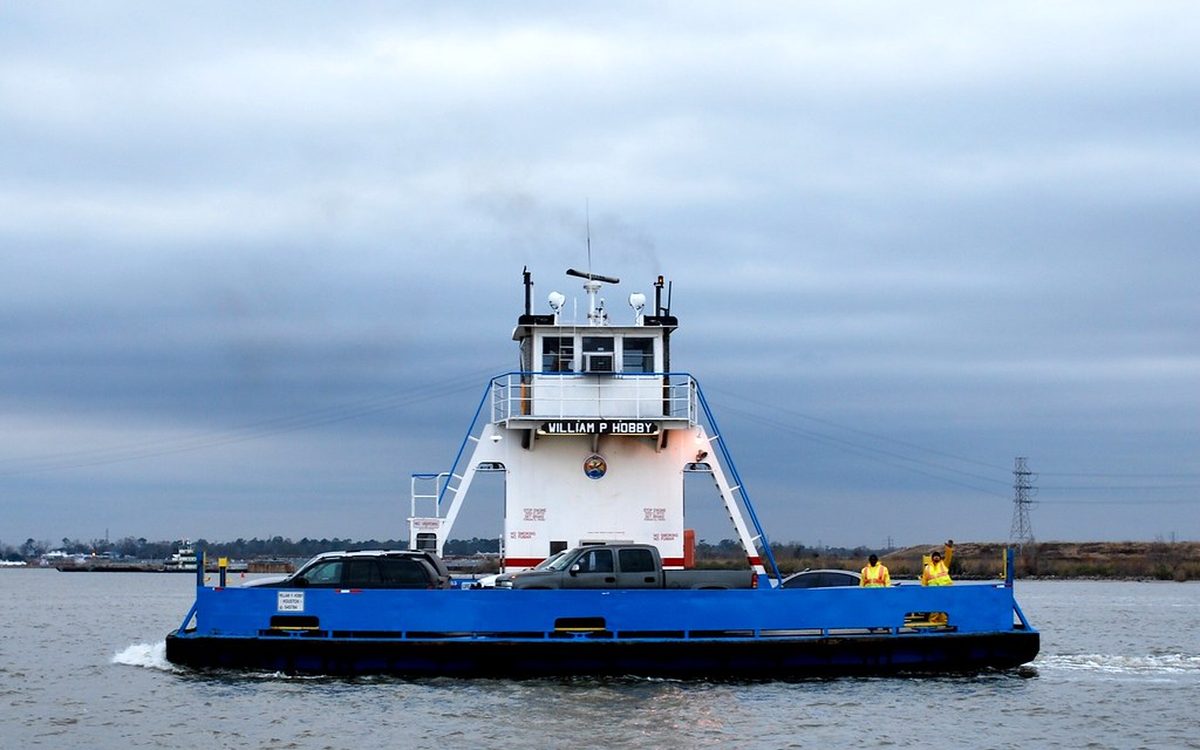
You can get there from here without a bridge. The Lynchburg Ferry, which Harris County runs and does not charge for, crosses the channel in a few minutes, under three by the county historical commission's count, seven to ten in wind and traffic. Either way, you land on the battleground side, with the monument standing over the trees ahead of you. It is the shortest distance in Texas between a town and the reason the town exists.
Let me tell the story plainly, since not everyone who lives here grew up with it, and the ones who did might not mind hearing it in a plain voice for once.
In the spring of 1836, Texas was a province of Mexico in open revolt, and it was losing. The Alamo had fallen in March with its defenders killed. A few weeks later, at Goliad, several hundred Texian prisoners who had surrendered were marched out and shot. The Mexican president and general, Santa Anna, had come north himself with a large army to finish it, and the small Texian force under Sam Houston had been retreating east for weeks, through rain and mud, with families fleeing ahead of it in what people afterward called the Runaway Scrape. Houston's own men thought he was a coward. Some of them said so.
On the twentieth of April the two armies came within sight of each other on the plain by the San Jacinto River, where it meets Buffalo Bayou, which is to say at the spot where the ship channel now bends toward Houston. Santa Anna had more men, even after splitting his army to chase Houston, and the part he had with him was camped with the bayou and the marsh at its back. On the afternoon of the twenty-first, in the middle of siesta, with the Mexican camp not properly guarded, Houston formed his line and walked it across the open ground toward the enemy. The two cannon the Texians had, which the people of Cincinnati had sent them and which everyone called the Twin Sisters, were dragged along into range. They got close before anyone raised an alarm. Then they ran.
The fighting, the part that could properly be called a battle, lasted about eighteen minutes. Then it became something else that went on into the evening in the marsh, and it was not a battle, and the men who were there did not all speak well of it afterward. Santa Anna escaped and was caught the next day, dressed as a private, and was given away when the captured soldiers saluted him. Houston, shot in the ankle, received him under a tree. The deal that followed sent the Mexican army south of the Rio Grande and left the Republic of Texas standing, for nine years, as a country of its own, before it joined the United States.
What did the eighteen minutes buy? It is easy, standing in that field with the reenactors, to think of the battle as the end of a story: the war won, the flag raised, the credits. It is more useful, if you live where we live, to think of it as the beginning of one, and to follow the line from the marsh to the refinery.
Consider what had to be true for a company from Houston to come to the shore of Goose Creek in 1919 and build a refinery. There had to be an oil field, and there was: the Goose Creek field, in production from about 1908, booming by 1916 and 1917, with derricks standing on pilings in the water of the creek and Tabbs Bay, one of the first places anywhere that oil was pulled from under open water. But a field is only a field. For a refinery, you also need something that oil geology does not provide. You need a set of rules about who owns what is under the ground, and a court that will enforce them, and a legislature that can be argued with, and a port that is dredged and kept open, and a state that will not, in the middle of your building, change hands. You need, in the plain sense, a government that is going to be there next year.
Take just the first of those, the rules about who owns what is under the ground, because it is the one people here would notice least and it may be the one that mattered most. Under the Spanish crown and then under Mexico, what lay beneath the soil belonged to the sovereign, not to the farmer who plowed it. Texas kept that rule for a while after the marsh. Then, in the constitution it wrote after the Civil War, it let go of it, and handed the minerals under a man's land to the man. That one sentence, written in Austin by people who had never seen an oil well, is why a farmer at Goose Creek could lease his own creek bottom to a driller in 1908 and why a company could gather up enough of those leases to be worth building a refinery beside. Other countries went the other way, and their oil belongs to the state, and their refineries are the state's business. Ours are what they are because of a choice made here, in the place, by people who had won the right to make it.
The eighteen minutes settled which government. Not well, and not for everyone; the Texas that came out of the marsh was a slaveholding republic, and the Mexican families who had been here before any of the newcomers found themselves, in the decades after, on the wrong side of a line that had been drawn through their own country. The town where half of us speak Spanish at home is the town it is partly because of that afternoon, and it would be a poor essay that pretended otherwise. But the settling happened. The question of whose law ran on this stretch of coast was answered, and once it was answered, everything that needed a stable answer could begin.
Look at what followed, in order. The republic, then statehood. The ranches on the prairie and the cotton down the rivers. The port of Galveston and, after the 1900 storm broke it, the argument that Houston should dig its own way to the sea, which it did, and which opened in 1914. Spindletop in 1901, near Beaumont, and after it the whole coast turned over like a field. Goose Creek. Humble Oil, which took its name from a town north of Houston and came here to build. The refinery, then the war, then the hundred-octane gasoline that went out of here by the shipload to fuel the fighters. Then the chemical plants after the war, and the olefins, and the plastic, and the storage hub under the salt at Mont Belvieu, and the pipe that runs from all of it to everywhere.
Every step in that chain rested on the step before it, and the first step was a line of tired men walking across a field with two cannon they had dragged into range.
I don't want to make the battle into something it wasn't. Nobody at San Jacinto was thinking about refineries. They were thinking about the Alamo and Goliad and about living to dark. Independence was not a plan for the future; it was a way to stop being killed. But that is how independence usually works, and it is why the word is worth taking apart a little.
Independence, for a country, means only this: that the decisions about the place get made in the place. It does not guarantee that the decisions will be good. It guarantees that they will be yours. What Texas won in the marsh was the right to be the ones who decided what to do with the coast, for better and for worse, and every derrick and furnace and cavern since then has been one of those decisions, made here, by people who could be found and argued with and voted out. That is the precondition. The whole hundred years of fire on the channel sits on top of it.
There's a way of seeing this that I think holds up from the pier at Bayland Park at night, with the flare going. What you're looking at, across the water, is a place where the leavings of a sea hundreds of millions of years old are being taken apart and rebuilt into the fuel that gets a rocket off the pad and the plastic that holds a bag of blood at the hospital on Garth Road. That's the large story and it's true. But between the ancient sea and the furnace there is a human layer, thin as paper, made of laws and deeds and permits and votes, and if that layer is torn the furnace goes cold, no matter how much oil is under the ground. Plenty of places have oil and no refinery. What they don't have is the eighteen minutes, or whatever their version of the eighteen minutes would have been: the afternoon when it was settled who decides.
So that's why I go across on the ferry on the Saturday nearest the twenty-first. Not for the cannon, though I like the cannon. For the flatness of the field. It's a marsh with a stone column in it, and it looks like nothing, and everything I can see from my own front porch depends on what happened there between about half past four and a quarter to five on a spring afternoon.
The reenactment ends. The wool coats come off. The kids get funnel cake. The ferry runs its short crossing back and forth, under three minutes or closer to ten, and on the deck you can turn your head one way and see the monument and the other way and see the towers on the channel, both of them white, both of them standing on the same flat ground, and the water going under you between them, the same water, brown and quick, that a man in a private's coat crouched in the tall grass beside one April afternoon in 1836, trying to get away, and didn't.