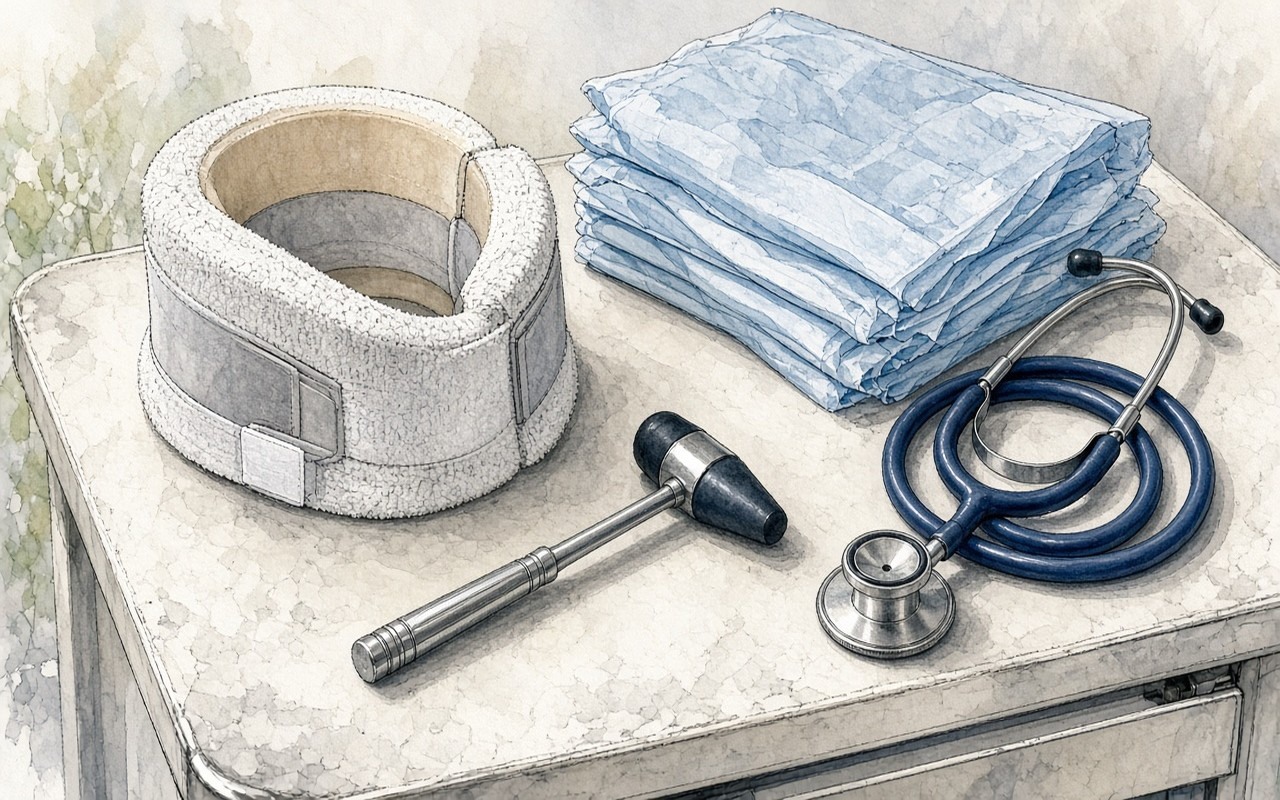
 Illustration
Tonight: call, urgent care, or the ER?
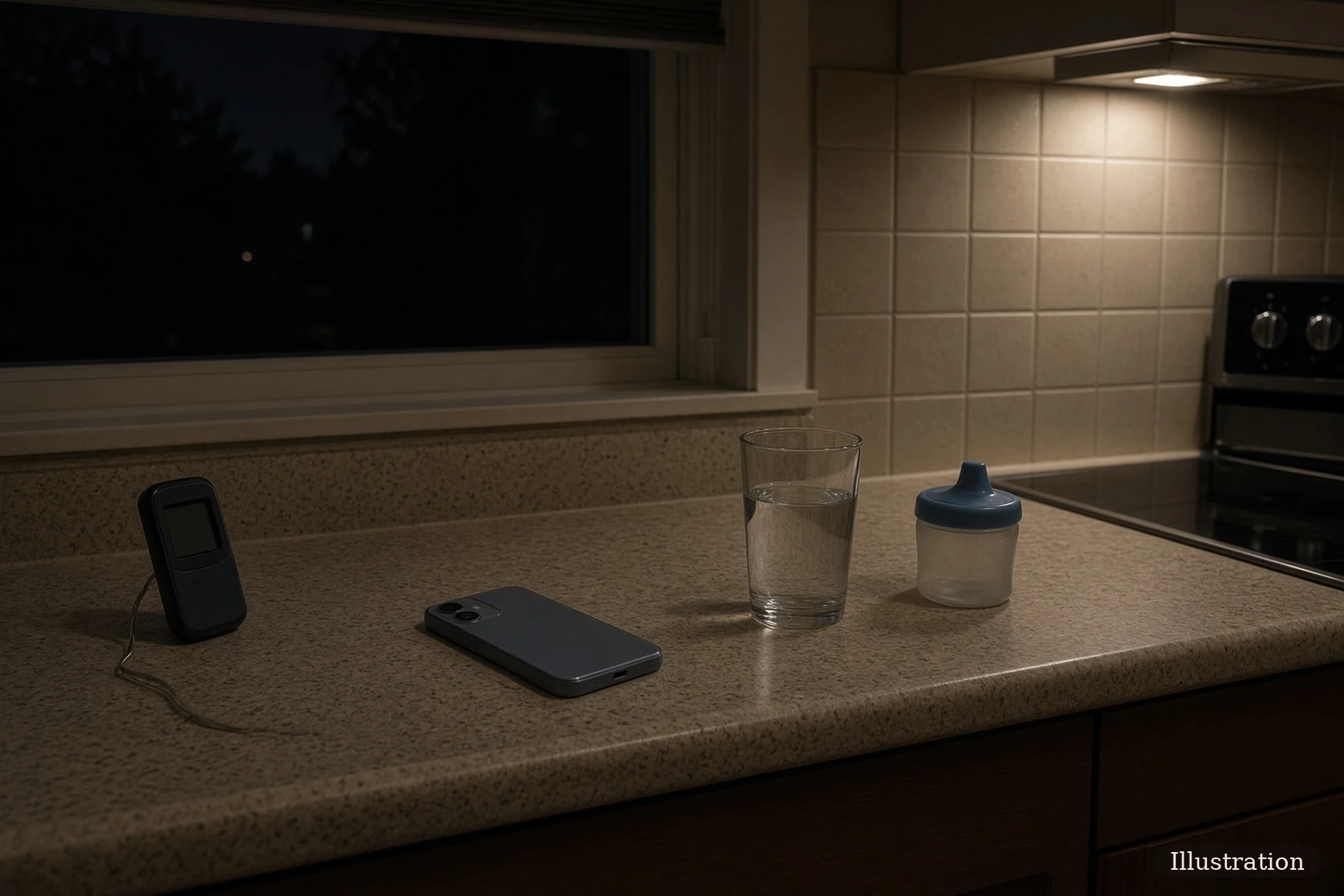 Illustration
When a child is sick at night, the first decision is the level of care, not the diagnosis. Use 911 for immediate danger, call the pediatrician for guidance, and choose urgent care or an emergency department based on how sick the child is.
Decide in this order
- First ask whether breathing or consciousness is threatened.
- Use 911 for an immediate emergency.
- For poison exposure, use Poison Control guidance.
- For a young infant with fever, call promptly.
- For uncertainty, use the pediatrician’s after-hours line.
- Use urgent care for same-day problems that are not dangerous.
- Use an emergency department for dangerous symptoms.
- Remember that a freestanding ER is still an ER.
- Know which facilities see children your child’s age.
- Write down fever readings and symptom timing.
- Bring the medicine list and coverage card.
- Choose the route before the bad night arrives.
The fuller answer
It's late, your child isn't right, and you're deciding. Here is how the people who write the guidelines sort it — so you can decide faster and with less fear. It isn't a diagnosis, and when in doubt, you call.
Call 911
For anything that looks like an emergency: a child who is hard to wake or can't be woken, is struggling to breathe or turning blue, has a seizure, is bleeding heavily, has been badly hurt, or has swallowed something dangerous and isn't breathing or is convulsing. Don't drive a child who is that sick — call.
Call these, any hour
- Poison Control: 1-800-222-1222 — free, expert, confidential, around the clock. If your child swallowed something, take away what's left and have them spit out what's in their mouth. Don't make them vomit. If it's on the skin, take off the clothes and rinse with lukewarm water for 15 minutes; in the eye, flush with room-temperature water for 15 minutes; if they breathed fumes, get them to fresh air.
- Your pediatrician's after-hours line. Most offices have one. Save it in your phone today. The nurses on those lines hear "I'm probably overreacting" all night long. You're allowed to call.
- Crisis line: 988, call or text, for a child or teen in emotional crisis.
Fever: when the American Academy of Pediatrics says to call
The AAP is plain about the youngest babies: a baby younger than 3 months (12 weeks) with a temperature of 100.4°F (38°C) or higher needs the pediatrician called right away, even if the baby seems otherwise fine. Don't wait until morning.
For older children, the AAP's list of reasons to call right away is not about the number alone. Call if your child with a fever looks very ill, is unusually drowsy or very fussy, or has been in a very hot place such as an overheated car. Call if there is a stiff neck, severe headache, severe sore throat, severe ear pain, trouble breathing, an unexplained rash, or repeated vomiting or diarrhea. Call if your child has an immune system problem or a heart problem, has had a seizure, or has a temperature above 104°F (40°C) more than once.
The AAP also says to call if a fever lasts more than 24 hours in a child under 2, or more than 3 days (72 hours) at age 2 or older, or if the child still acts sick after the fever comes down. If you reach a nurse line and they say come in, come in.
Urgent care or the ER?
Urgent care is for the things that need a doctor today but aren't dangerous: an earache, a sore throat, a sprain, a cut that may need stitches, a rash, a fever in an older child who is drinking and alert. The hospital emergency room is for the dangerous things.
A freestanding emergency room is an emergency room, not an urgent care — its insurance and billing rules can be different, so don't choose one because the building looks like a walk-in clinic. If you are not sure what your insurance treats as in network, that is a question for daytime, not for the parking lot, unless your child is in danger.
Which door in Baytown
For a true emergency in Baytown, the hospital emergency department is Houston Methodist Baytown Hospital Emergency Department, at 4401 Garth Road, open all night and every day. Tell the person at the desk your child's age and what happened first, and they will sort it from there.
Two other emergency rooms are listed. Neighbors Emergency Center, at 6051 Garth Road, and Family First ER, at 5410 East Freeway, both list 24 hours a day, every day. They are emergency rooms, so use them the way you would use a hospital ER, and ask about how your insurance treats them when things are calm.
For the middle band of problems, three urgent care clinics list evening hours. American Family Care Baytown, at 8831 TX-146, Suite 100, lists 8 a.m. to 8 p.m. on weekdays and 8 to 5 on Saturday and Sunday. UrgentcareMDs, at 1658 W. Baker Road, lists 9 a.m. to 9 p.m. on weekdays and 9 to 7 on weekends. Next Level Urgent Care, at 7710 Garth Road, Suite A, lists 9 a.m. to 9 p.m. every day. Hours are as each clinic lists them, and it costs nothing to ask on the phone whether a clinic sees children as young as yours before you drive there.
- Urgent care open now — the clinics near you with their closing times.
- Urgent care in Baytown — each clinic, with hours from its own site.
- Which door — the same decision for the whole family, including why a freestanding ER is still an ER.
Do this before the bad night
Most of the fear in these nights is not knowing. Ten minutes on a calm evening helps: save the pediatrician's after-hours number in your phone, save Poison Control, write down your child's weight, allergies and medicines on a note on the fridge, and pick which urgent care and which ER you would drive to. Know the route. If your child has a regular doctor, the pediatricians in the Baytown area page lists the practices. If you don't have one, finding a doctor when you don't have one tells you where to begin.
Before you go
- Bring the medicine list, the insurance or Medicaid card and your own photo ID.
- Write down when the fever started, what the thermometer said and what the child has had to drink, so you can answer quickly when the nurse asks.
- Call ahead to an urgent care to ask if it sees children of your child's age, since we cannot tell that from the listing.
- Bring a phone charger, a snack for yourself and the stuffed animal.
- If you are unsure whether to leave the house at all, call the pediatrician's after-hours line first, because that is what it is for.
Sources
AAP HealthyChildren.org, "Fever and Your Baby," "When to Call the Pediatrician" and "Poison Prevention"; Poison Control (poison.org); 988 Suicide & Crisis Lifeline; Houston Methodist Baytown; hours for the other emergency rooms and urgent care clinics as listed by each facility.
En español
Esta noche: ¿llamar, urgencias o sala de emergencias?
Cuando un niño está enfermo de noche, la primera decisión es el nivel de atención, no el diagnóstico. Esto no es un diagnóstico, y ante la duda, llame.
Llame al 911
Llame ante cualquier cosa que parezca una emergencia: un niño al que cuesta despertar o no despierta, que le cuesta respirar o se pone morado, que tiene una convulsión, que sangra mucho, que se lastimó gravemente o que tragó algo peligroso y no respira o convulsiona. No maneje con un niño tan enfermo; llame.
Llame a estos números a cualquier hora
- Control de Envenenamientos: 1-800-222-1222. Es gratuito, confidencial, atiende expertos y funciona las 24 horas. Si su hijo tragó algo, retire lo que quede y haga que escupa lo que tenga en la boca. No lo haga vomitar. Si fue en la piel, quítele la ropa y enjuague con agua tibia durante 15 minutos; si fue en el ojo, enjuague con agua a temperatura ambiente durante 15 minutos; si respiró vapores, llévelo al aire fresco.
- La línea de cuidados fuera de horario de su pediatra. La mayoría de los consultorios tiene una. Guárdela hoy en su teléfono. Las enfermeras de esas líneas oyen toda la noche "seguro estoy exagerando". Usted tiene derecho a llamar.
- Línea de crisis: 988, por llamada o texto, para un niño o adolescente en crisis emocional.
Fiebre: cuándo dice la Academia Estadounidense de Pediatría que debe llamar
La Academia es clara sobre los bebés más pequeños: a un bebé menor de 3 meses (12 semanas) con temperatura de 100.4°F (38°C) o más hay que llamar al pediatra de inmediato, aunque por lo demás parezca estar bien. No espere a la mañana.
En niños mayores, la lista de motivos para llamar de inmediato no depende solo del número. Llame si su hijo con fiebre se ve muy enfermo, está inusualmente adormilado o muy irritable, o ha estado en un lugar muy caliente, como un auto sobrecalentado. Llame si hay cuello rígido, dolor de cabeza intenso, dolor de garganta intenso, dolor de oído intenso, dificultad para respirar, un sarpullido sin explicación o vómitos o diarrea repetidos. Llame si su hijo tiene un problema del sistema inmunitario o del corazón, ha tenido una convulsión o ha tenido más de una vez una temperatura superior a 104°F (40°C).
La Academia también dice que llame si la fiebre dura más de 24 horas en un niño menor de 2 años, o más de 3 días (72 horas) desde los 2 años, o si el niño sigue con aspecto de enfermo después de que baja la fiebre. Si habla con una línea de enfermeras y le dicen que vaya, vaya.
¿Urgencias o sala de emergencias?
La clínica de urgencias es para lo que necesita un médico hoy pero no es peligroso: dolor de oído, dolor de garganta, un esguince, un corte que quizá necesite puntos, un sarpullido, una fiebre en un niño mayor que toma líquidos y está alerta. La sala de emergencias del hospital es para lo peligroso.
Una sala de emergencias independiente es una sala de emergencias, no una clínica de urgencias; sus reglas de seguro y de cobro pueden ser distintas, así que no la escoja porque el edificio parece una clínica sin cita. Si no está seguro de qué trata su seguro como parte de la red, es una pregunta para el día, no para el estacionamiento, a menos que su hijo esté en peligro.
Qué puerta en Baytown
Para una verdadera emergencia en Baytown, la sala de emergencias del hospital es la de Houston Methodist Baytown Hospital, en 4401 Garth Road, abierta toda la noche y todos los días. Diga a la persona en el mostrador la edad de su hijo y lo que pasó primero, y ahí lo organizarán.
Hay otras dos salas de emergencias. Neighbors Emergency Center, en 6051 Garth Road, y Family First ER, en 5410 East Freeway, anuncian 24 horas al día, todos los días. Son salas de emergencias, así que úselas como usaría la de un hospital, y pregunte cómo las trata su seguro cuando todo esté tranquilo.
Para los problemas de en medio, tres clínicas de urgencias anuncian horario de noche. American Family Care Baytown, en 8831 TX-146, Suite 100, anuncia de 8 a.m. a 8 p.m. entre semana y de 8 a 5 los sábados y domingos. UrgentcareMDs, en 1658 W. Baker Road, anuncia de 9 a.m. a 9 p.m. entre semana y de 9 a 7 los fines de semana. Next Level Urgent Care, en 7710 Garth Road, Suite A, anuncia de 9 a.m. a 9 p.m. todos los días. Los horarios son los que cada clínica publica, y preguntar por teléfono no cuesta nada: confirme si atienden a niños de la edad del suyo antes de manejar hasta allá.
- Urgencias abiertas ahora: las clínicas cercanas con su hora de cierre.
- Urgencias en Baytown: cada clínica, con el horario de su propio sitio.
- Qué puerta: la misma decisión para toda la familia, incluido por qué una sala de emergencias independiente sigue siendo una sala de emergencias.
Haga esto antes de la mala noche
Gran parte del miedo en estas noches es no saber. Ayudan diez minutos en una tarde tranquila: guarde en su teléfono el número del pediatra para fuera de horario y el de Control de Envenenamientos, anote en una nota en el refrigerador el peso, las alergias y las medicinas de su hijo, y decida a qué clínica de urgencias y a qué sala de emergencias iría. Conozca el camino. Si su hijo tiene médico, la página de pediatras en el área de Baytown enumera los consultorios. Si no tiene, cómo encontrar médico cuando no tiene uno le dice por dónde empezar.
Antes de ir
- Lleve la lista de medicinas, la tarjeta del seguro o de Medicaid y su propia identificación con foto.
- Anote cuándo empezó la fiebre, qué marcó el termómetro y qué ha tomado el niño, para contestar rápido cuando la enfermera le pregunte.
- Llame antes a una clínica de urgencias para preguntar si atiende a niños de la edad del suyo, porque el listado no lo dice.
- Lleve un cargador de teléfono, algo de comer para usted y el peluche.
- Si no sabe si debe salir de casa, llame primero a la línea de cuidados fuera de horario del pediatra, porque para eso existe.
Places named on this page(6)
Illustration Illustration
 Illustration
American Family Care Baytown
Hours
| Mon | 8 AM – 8 PM |
|---|---|
| Tue | 8 AM – 8 PM |
| Wed | 8 AM – 8 PM |
| Thu | 8 AM – 8 PM |
| Fri | 8 AM – 8 PM |
| Sat | 8 AM – 5 PM |
| Sun | 8 AM – 5 PM |
 Illustration
UrgentcareMDs
Hours
| Mon | 9 AM – 9 PM |
|---|---|
| Tue | 9 AM – 9 PM |
| Wed | 9 AM – 9 PM |
| Thu | 9 AM – 9 PM |
| Fri | 9 AM – 9 PM |
| Sat | 9 AM – 7 PM |
| Sun | 9 AM – 7 PM |
 Illustration
Next Level Urgent Care
Hours
| Mon | 9 AM – 9 PM |
|---|---|
| Tue | 9 AM – 9 PM |
| Wed | 9 AM – 9 PM |
| Thu | 9 AM – 9 PM |
| Fri | 9 AM – 9 PM |
| Sat | 9 AM – 9 PM |
| Sun | 9 AM – 9 PM |