 Illustration
Baytown Clinic Pharmacy
Hours
| Mon | 8 AM – 5 PM |
|---|---|
| Tue | 8 AM – 5 PM |
| Wed | 8 AM – 5 PM |
| Thu | 8 AM – 5 PM |
| Fri | 8 AM – 5 PM |
| Sat | Closed |
| Sun | Closed |
 Illustration
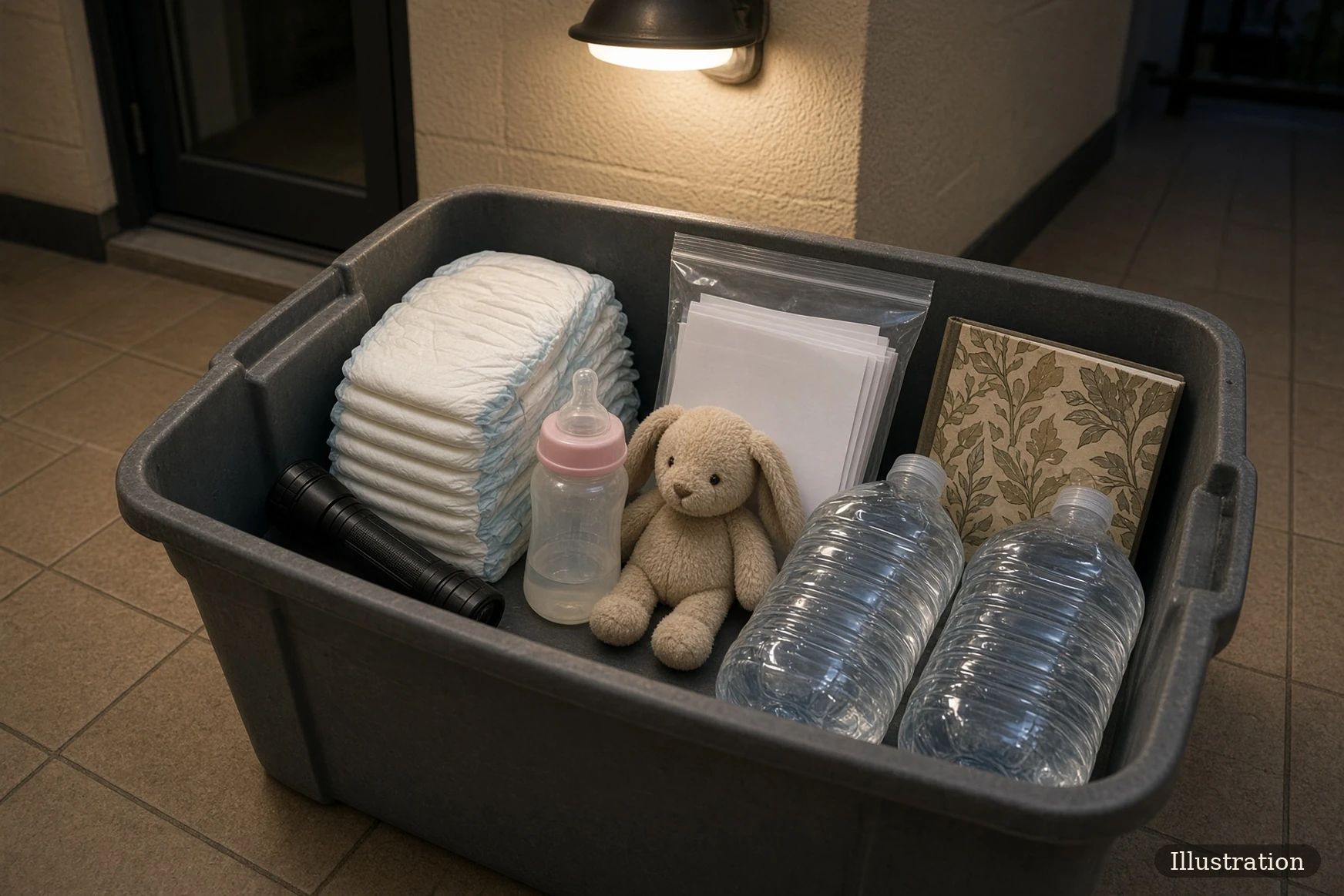
Preparing for a hurricane with children is mostly ordinary parenting done early. Pack medicines, feeding supplies and comfort items before a storm forms, then make the plan simple enough to follow when everyone is tired.
Ask anyone who grew up in Baytown about a hurricane and you'll hear it from a child's point of view: the candles, the cousins sleeping on the living room floor, the sound of the wind at night, the week without school. Alicia in 1983, Ike in 2008, Harvey in 2017, Beryl in 2024. The grown-ups remember the water and the power bills. The kids remember whether it felt safe.
Mostly, that comes down to you. Children read the storm in their parents' faces, and a parent who has already packed the bin is a calmer parent. So do the work in the spring, on a clear day, when the stores are full and nobody is worried.
Ready.gov's list for families, beyond the usual water, food, flashlight and radio. For water, Ready.gov's rule is one gallon per person per day for several days, and that counts the baby, the toddler and the teenager the same. - Formula, bottles, diapers and wipes, enough for several days, plus diaper rash cream. If you use powdered formula, the CDC suggests keeping ready-to-feed formula for emergencies, since it doesn't need water that may not be safe to drink. - Medicines your child takes, and a copy of any prescription. If a medicine needs the refrigerator, ask the pharmacist now what to do when the power goes out. - Copies of the important papers: birth certificates, insurance cards, the shot record. Keep them in a waterproof bag. - A recent photo of each child, in case you're separated. - Something familiar: the stuffed animal, a blanket, a few books, cards or a small game. Anything that makes a shelter or a relative's floor feel less strange. - Extra clothes and shoes for each child, and a phone charger that doesn't need the wall.
Ready.gov also suggests keeping a kit in more than one place, at home, at work and in the car, since a storm doesn't always find you in the kitchen.
A storm week is a bad time to learn the pharmacy is out of your child's medicine. Do the refill and the pharmacist conversation in May, not in the last two days before landfall. The Baytown Clinic Pharmacy at 1602 Garth Road, inside the Harris Health clinic, lists weekday hours of 8 a.m. to 5 p.m. CVS Pharmacy at 1514 N. Alexander Drive lists pharmacy hours until 9 p.m. Monday to Saturday and until 6 p.m. Sunday. Walmart Pharmacy at 8700 N. Highway 146 lists 9 a.m. to 7 p.m. Monday to Saturday and 10 a.m. to 6 p.m. Sunday. Birdsongs Pharmacy at 4002 Garth Road, Suite 140A, is open weekdays 9 a.m. to 7 p.m. and Saturday 11 a.m. to 2 p.m. These are the hours we hold, and pharmacies change them, so ask when you drop the prescription off.
The days after a storm can be more dangerous than the storm itself. - Generators go outside, far from windows, doors and vents, and never in the garage. Carbon monoxide has no smell, and the CDC counts babies among the people most at risk. - Keep children out of floodwater. It hides holes, snakes and whatever the water picked up on the way, and the American Academy of Pediatrics warns it can carry oil, gasoline and pesticides. - Heat is the quiet danger when the power is out in a Texas summer. The CDC notes that babies and young children are especially sensitive to heat. If your house gets too hot, go somewhere that has power: a relative, a friend, or a cooling center if the city opens one. - If you evacuate, don't rush back. The AAP's advice is not to return until basic utilities are restored, because without water, power and working sewage, caring for children gets hard fast.
Tell children what's happening in words their age can hold, and tell them the plan. The AAP says older children want and will benefit from more detail than younger ones, and that not talking about what happened makes it more frightening. Don't tell a child they shouldn't be worried; ask what they've heard and correct what's wrong. Let the older ones help pack the bin, because a job makes a child feel less helpless. Keep bedtimes and small routines where you can, since children do better with routine and structure. Turn the news off when the little ones are in the room; they don't need the same satellite loop forty times.
The AAP also says children are likely to be more affected by your own emotional state, so watch your stress and share the coping strategies that work for you. If your child's sleep or eating stays off for weeks, or the worry, clinging or withdrawal doesn't ease, that is a reason to call the pediatrician (finding one). Sleep in a Baytown family has the sleep ranges by age if you want something to measure against.
Know your school's and your child care's storm plans before the season, including how they'll reach you and who may pick up your child.
For evacuation zones, storm news, shelters and the rest of the plan, see the Baytown hurricane guide. The health side of a storm is covered in our care pages on storms.
Ready.gov, "Build a Kit" and its guidance for families with children; CDC, infant formula preparation in emergencies; CDC, carbon monoxide poisoning after a disaster; CDC, heat and infants and children; AAP HealthyChildren.org, "Hurricanes & Floods: Taking Care of Your Children and Yourself"; National Hurricane Center storm records (Alicia 1983, Ike 2008, Harvey 2017, Beryl 2024); pharmacy hours as listed in each place card.
Los niños leen la tormenta en la cara de sus papás; prepare la caja en primavera. Además de agua (un galón por persona al día), comida, linterna y radio, agregue fórmula, biberones, pañales, medicinas con copia de la receta, papeles en bolsa impermeable, una foto de cada niño y su peluche o cobija. Surta las recetas antes de la temporada. Después de la tormenta: el generador siempre afuera, los niños fuera del agua de inundación, y si la casa se calienta demasiado sin luz, vayan a un lugar con electricidad. No regrese hasta que vuelvan los servicios básicos. Explíqueles el plan con palabras que entiendan, mantenga las rutinas y apague las noticias. Si el sueño o el apetito no se normalizan, llame al pediatra. Zonas de evacuación y refugios: nuestra guía de huracanes de Baytown.
Illustration| Mon | 8 AM – 5 PM |
|---|---|
| Tue | 8 AM – 5 PM |
| Wed | 8 AM – 5 PM |
| Thu | 8 AM – 5 PM |
| Fri | 8 AM – 5 PM |
| Sat | Closed |
| Sun | Closed |
| Mon | 8 AM – 10 PM |
|---|---|
| Tue | 8 AM – 10 PM |
| Wed | 8 AM – 10 PM |
| Thu | 8 AM – 10 PM |
| Fri | 8 AM – 10 PM |
| Sat | 8 AM – 10 PM |
| Sun | 8 AM – 10 PM |
| Mon | 6 AM – 11 PM |
|---|---|
| Tue | 6 AM – 11 PM |
| Wed | 6 AM – 11 PM |
| Thu | 6 AM – 11 PM |
| Fri | 6 AM – 11 PM |
| Sat | 6 AM – 11 PM |
| Sun | 6 AM – 11 PM |
| Mon | 9 AM – 7 PM |
|---|---|
| Tue | 9 AM – 7 PM |
| Wed | 9 AM – 7 PM |
| Thu | 9 AM – 7 PM |
| Fri | 9 AM – 7 PM |
| Sat | 11 AM – 2 PM |
| Sun | Closed |
Ours to fix
We read every one, and we write back when it's fixed.