DaVita Baytown Dialysis
Hours
| Mon | 5 AM – 8:30 PM |
|---|---|
| Tue | 5 AM – 8 PM |
| Wed | 6 AM – 8:30 PM |
| Thu | 5 AM – 8 PM |
| Fri | 5 AM – 8:30 PM |
| Sat | 5 AM – 8 PM |
| Sun | Closed |
 Illustration
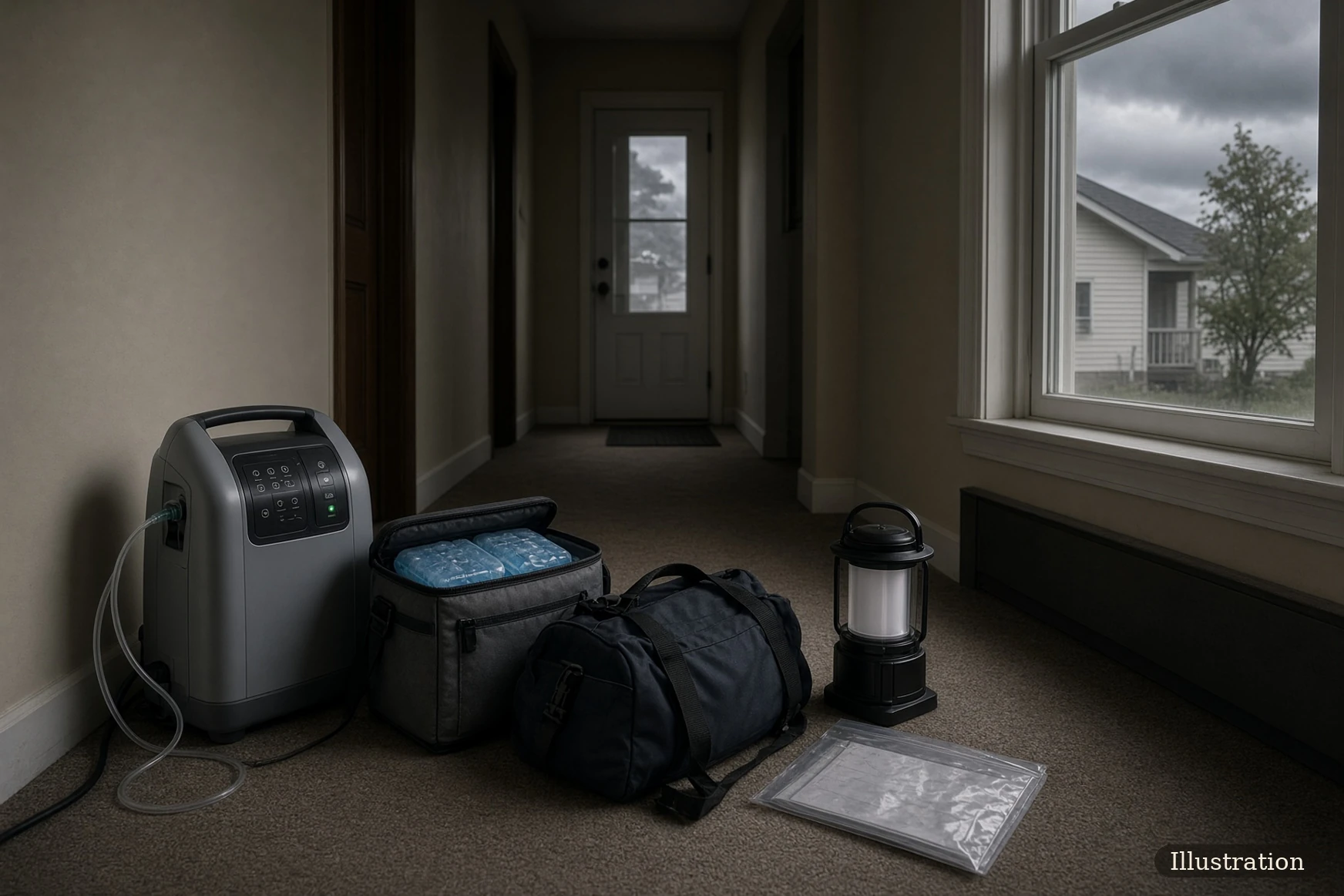
A storm plan for a medically fragile household is different from a general hurricane kit. Register needs early, protect medicines and powered equipment, and know where care can continue if Baytown loses power.
For most households, getting ready for a hurricane means water, batteries and gas in the car. For a household with oxygen, insulin, dialysis, a wheelchair or a bedridden grandparent, it means much more, and the days after the storm can be more dangerous than the storm itself. This page is for those households.
STEAR, the State of Texas Emergency Assistance Registry, is a free registry that gives local emergency planners and responders information about people in their community who may need extra help. The state built it to help local governments learn what their residents need during an emergency. It's meant for people with disabilities, medical conditions, limited mobility, communication barriers, transportation needs or a need for personal care. Register online at stear.texas.gov, through the 2-1-1 Texas helpline, or on a paper form in English or Spanish. Signing up is voluntary and doesn't guarantee a particular service, but it puts you on the map for the people planning the response. Do it now, while the sky is clear.
2-1-1 Texas is also the state's line for finding help in general: food, shelter, rent and utility assistance, and disaster help.
What's still safe in the fridge: Eating after the storm.
Baytown lives beside some of the largest industrial complexes in the country, and it has a warning system built for that. Outdoor sirens are tested every Wednesday at 9 a.m., for one full minute. That's the Greater Baytown-area Local Emergency Planning Committee, which runs the chemical-emergency siren system. If you hear a siren at any other time, the instruction for a chemical emergency is to shelter in place:
1. Go inside right away, with your family and pets. 2. Close and lock the windows and doors. 3. Turn off the air conditioning and fans, and close fireplace dampers. 4. Go to an interior room and seal gaps with tape, plastic or damp towels. 5. Turn on local radio or TV, and wait for the official all-clear.
If someone in the house has asthma or COPD, keep their inhalers and medicines in the room you'd shelter in, not in the car. Register for the city's phone, text and email alerts on the City of Baytown's emergency management page.
For the rest of the hurricane plan (zones, evacuation, shelters), see the Baytown hurricane guide. For children, see Hurricanes with little ones.
Texas Division of Emergency Management, STEAR; 2-1-1 Texas (Texas HHS); Greater Baytown-area LEPC, services and siren testing; City of Baytown Office of Emergency Management, chemical emergencies and preparedness; CDC, carbon monoxide poisoning after a disaster; CDC, refrigerated drugs during natural disasters and managing insulin in an emergency; CDC, heat and health.
| Mon | 5 AM – 8:30 PM |
|---|---|
| Tue | 5 AM – 8 PM |
| Wed | 6 AM – 8:30 PM |
| Thu | 5 AM – 8 PM |
| Fri | 5 AM – 8:30 PM |
| Sat | 5 AM – 8 PM |
| Sun | Closed |
| Mon | 6:30 AM – 5:30 PM |
|---|---|
| Tue | 6:30 AM – 5:30 PM |
| Wed | 6:30 AM – 5:30 PM |
| Thu | 6:30 AM – 5:30 PM |
| Fri | 6:30 AM – 5:30 PM |
| Sat | 6:30 AM – 5:30 PM |
| Sun | Closed |
| Mon | 8 AM – 5 PM |
|---|---|
| Tue | 8 AM – 5 PM |
| Wed | 8 AM – 5 PM |
| Thu | 8 AM – 5 PM |
| Fri | 8 AM – 5 PM |
| Sat | Closed |
| Sun | Closed |
Ours to fix
We read every one, and we write back when it's fixed.