Health on the night shift
 Illustration
Night work changes sleep, meals, light exposure and the drive home, not just the clock. Protecting health on a rotation means planning for sleep and care as deliberately as the shift itself.
The fuller answer
Health care has a clock built into its language. Take this in the morning. Fast overnight. Call the office after eight. Schedule the test before noon. All of it assumes that morning, work and sleep come in the usual order.
In Baytown, a lot of them don't. A night-shift worker eats dinner while the rest of the house eats breakfast. A 12-hour shift ends just as the clinic opens. The first appointment of the day is already the thirteenth hour awake, with a drive home after it. The household runs on two clocks, and somebody is always tiptoeing.
A town that depends on night work ought to be unusually good at remembering that night workers exist. This page is a start.
What the research says
The National Institute for Occupational Safety and Health (NIOSH) studies shift work closely. Night shifts and long hours disrupt sleep and build up fatigue, and fatigue slows reaction time and dulls attention, memory and judgment. NIOSH adds that sleep loss can bring irritability, anxiety and low mood, and that communication suffers: you fumble for the right word or misread what someone says. Over years, shift work is linked with higher risk to the heart, the gut, metabolism, mood and muscles. NIOSH also singles out drowsy driving after a shift as a real danger. Those are patterns across many workers, not a prediction about you. But they're worth knowing when you decide whether to drive home or take a nap first.
The drive home
Most adults need about 7 to 8 hours of sleep to stay alert. NIOSH warns that just a few seconds of sleep at the wheel can be enough to lose control of the car. If you are very sleep deprived, caffeine and a short nap may still not keep you awake enough to drive safely. And if you are already rolling the window down, turning up the radio or pinching yourself, NIOSH's point is that you are impaired enough to cause a crash. Its practical advice is to plan ahead: a ride from a family member or friend, a taxi, or a nap at work before you go. Decide on the plan before the shift, not at 6 a.m.
Questions to take to the doctor
A website can't set your medicine schedule, and it shouldn't try. It can give you the questions that make the appointment work. - "When you say morning, do you mean when I wake up, or a clock time?" For some medicines it matters a great deal, and for others it doesn't. Ask. - "Does this test need fasting, and how do I fit that around my sleep?" - "Do you have early, late or weekend appointments?" - "If I'm having a procedure with sedation after a night shift, is that a problem?" You'll need a ride home either way. - "This therapy is three times a week at noon. Is there another time that fits a rotation?"
Sleep in the daytime
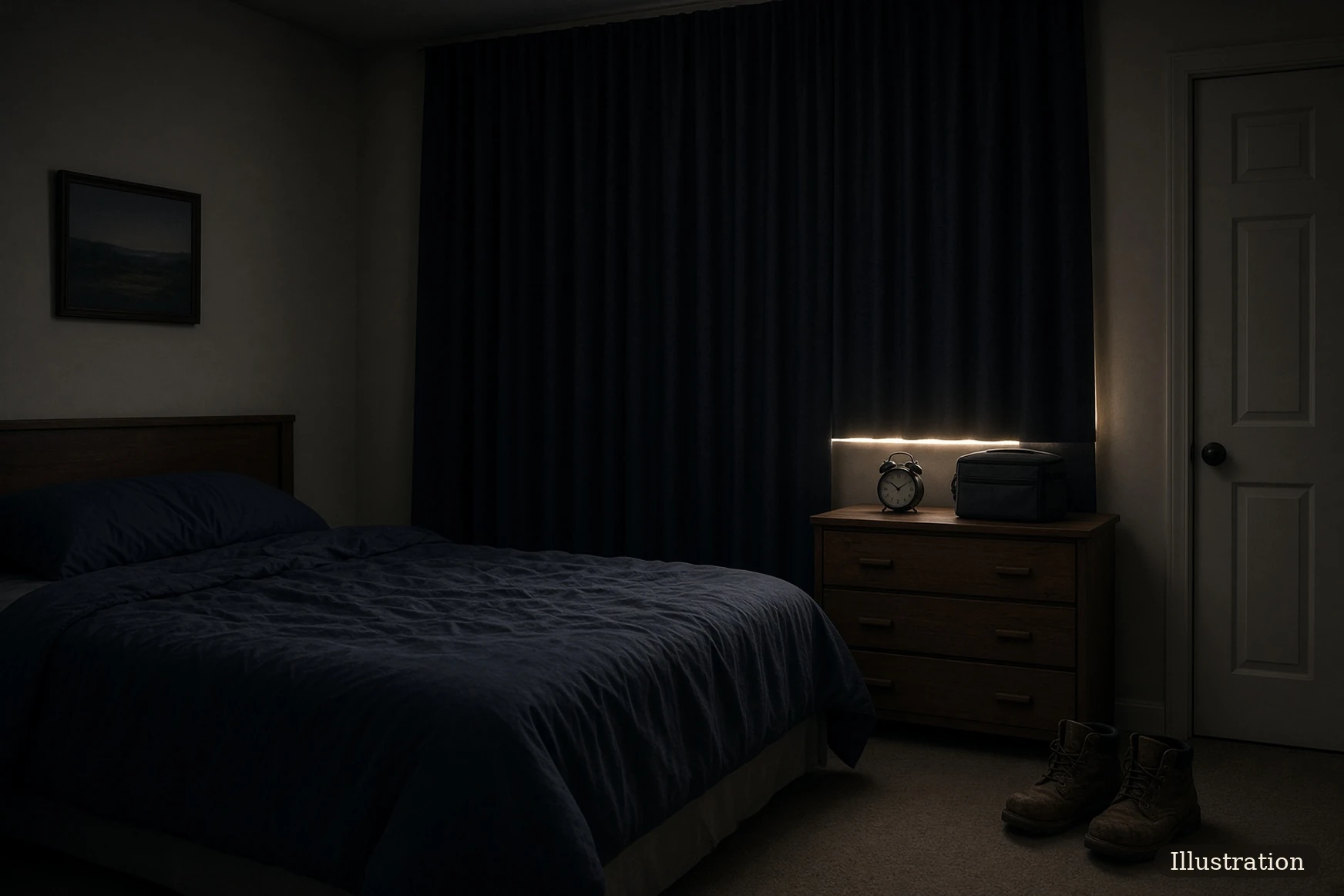
NIOSH's advice for shift workers comes down to protecting the sleep you get: a dark, cool, quiet room, a consistent routine, and planned naps. Its training for night workers suggests sleeping as soon as you get home and sleeping as long as you can, and keeping some sleep hours the same on work days and days off, such as 8 a.m. to noon, rather than flipping to a daytime schedule that leaves you in permanent jet lag. It also warns against staying awake too long before your first night shift or after your last, since that stacks up the risk of accidents. A brief nap of about 30 minutes can raise alertness during the night shift, and NIOSH notes that you should allow time for the grogginess after waking to pass before you go back to work. Blackout curtains, a fan for noise, and a family that knows the hours are sacred all help. So does a sign on the door.
Heat on the job
Protective gear adds its own heat to a Texas afternoon. NIOSH's guidance for employers is to build workers up to hot work gradually over several days, especially new workers or anyone coming back from time away, and to plan rest and water. Some common medicines make heat harder on the body too (see The medicines in the house). If you're changing shifts or coming back from vacation into a hot unit, give your body those first days.
Care that fits a rotation
What is open when? These are the hours in our listings, and they change, so confirm before you drive. - Emergency care never closes. Neighbors Emergency Center, 6051 Garth Rd, is listed open 24 hours. - Walgreens, 4849 N Highway 146, lists store hours of 7 a.m. to 11 p.m. every day. Pharmacy counter hours can be shorter. - American Family Care Baytown Garth, 6040 Garth Rd, is open weekdays 8 a.m. to 8 p.m. and weekends 8 to 5. - UrgentcareMDs, 1658 W Baker Rd, is open weekdays 9 a.m. to 9 p.m. and weekends 9 to 7. - Labcorp, 1674 W Baker Rd, is a lab with listed weekday hours of 8 a.m. to 4 p.m., which can fit a fasting test right after a shift. - Baytown Imaging Center LLC, 2800 Garth Rd, lists 8 a.m. to 7 p.m. every day of the week. - Prime Occupational Medicine, 4404 N Main St, is open weekdays 7:30 a.m. to 4:30 p.m. for work-related care. - Sleep Better Baytown, 3800 N Main St, Suite 2, is the sleep specialist in our listings, with weekday office hours that end at noon on Fridays.
For the family at home
The person on nights may miss the dentist, the checkup, the screening, and nobody notices for years. If you're the one who keeps the family calendar, put their appointments on it too, at an hour that works for them. See Checkups and screenings.
When the shift ends and you need to eat, see Late-shift fuel.
Before you go
- Ask when you book whether the office has early, late or weekend appointments, and whether a fasting test can be drawn right after your shift.
- Arrange a ride home in advance for any procedure with sedation, and for any morning you are running on too little sleep.
- Give the front desk your real sleep schedule so "take in the morning" means something on your chart.
- Check pharmacy counter hours before you drive, since the store can stay open after the pharmacy closes.
- Put your own checkup on the family calendar today.
Sources
CDC/NIOSH, "Fatigue and Work"; NIOSH Training for Nurses on Shift Work and Long Work Hours, including the modules on sleep, napping and driving; NIOSH, heat stress and acclimatization; CDC, heat and medications.
Places named on this page(8)
Walgreens
Hours
| Mon | 7 AM – 11 PM |
|---|---|
| Tue | 7 AM – 11 PM |
| Wed | 7 AM – 11 PM |
| Thu | 7 AM – 11 PM |
| Fri | 7 AM – 11 PM |
| Sat | 7 AM – 11 PM |
| Sun | 7 AM – 11 PM |
American Family Care Baytown Garth
Hours
| Mon | 8 AM – 8 PM |
|---|---|
| Tue | 8 AM – 8 PM |
| Wed | 8 AM – 8 PM |
| Thu | 8 AM – 8 PM |
| Fri | 8 AM – 8 PM |
| Sat | 8 AM – 5 PM |
| Sun | 8 AM – 5 PM |
UrgentcareMDs
Hours
| Mon | 9 AM – 9 PM |
|---|---|
| Tue | 9 AM – 9 PM |
| Wed | 9 AM – 9 PM |
| Thu | 9 AM – 9 PM |
| Fri | 9 AM – 9 PM |
| Sat | 9 AM – 7 PM |
| Sun | 9 AM – 7 PM |
 Illustration
Labcorp
Hours
| Mon | 8 AM – 4 PM |
|---|---|
| Tue | 8 AM – 4 PM |
| Wed | 8 AM – 4 PM |
| Thu | 8 AM – 4 PM |
| Fri | 8 AM – 4 PM |
| Sat | Closed |
| Sun | Closed |
Baytown Imaging Center LLC
Hours
| Mon | 8 AM – 6 PM |
|---|---|
| Tue | 8 AM – 6 PM |
| Wed | 8 AM – 6 PM |
| Thu | 8 AM – 6 PM |
| Fri | 8 AM – 6 PM |
| Sat | 8 AM – 6 PM |
| Sun | 8 AM – 6 PM |
Prime Occupational Medicine
Hours
| Mon | 7:30 AM – 4:30 PM |
|---|---|
| Tue | 7:30 AM – 4:30 PM |
| Wed | 7:30 AM – 4:30 PM |
| Thu | 7:30 AM – 4:30 PM |
| Fri | 7:30 AM – 4:30 PM |
| Sat | Closed |
| Sun | Closed |
Sleep Better Baytown
Hours
| Mon | 8 AM – 4:30 PM |
|---|---|
| Tue | 8 AM – 5 PM |
| Wed | 8 AM – 5 PM |
| Thu | 8 AM – 4:30 PM |
| Fri | 8 AM – 12 PM |
| Sat | Closed |
| Sun | Closed |